
PRIME MOVER
INDUSTRIES LIMITED
Electric Semi Trailers: The Future of Green Freight Transport
The global freight industry stands at a pivotal crossroads. With road freight accounting for the vast majority of inland cargo movement and diesel-powered trucks dominating the landscape, the pressure to decarbonize has never been greater. Yet the path to zero-emission freight transport is fraught with challenges—high upfront costs, limited charging infrastructure, and range anxiety that plagues fleet operators.
Enter the electric semi-trailer: an emerging solution that promises to transform the economics and environmental impact of freight transport without requiring operators to abandon their existing tractor fleets. By electrifying the trailer rather than the tractor, this technology offers a pragmatic, cost-effective bridge to a greener future.
This article explores the market landscape, technological innovations, real-world deployments, and the transformative potential of electric semi-trailers in 2026 and beyond.
Market Overview: A Sector Poised for Explosive Growth
The electric semi-trailer market is still in its early stages, but the growth trajectory is nothing short of remarkable. According to industry analysis, the Electric Semi-Trailer Market was valued at $2.14 billion in 2024 and is expected to grow from $2.67 billion in 2025 to $25 billion by 2035. This represents a compound annual growth rate (CAGR) of approximately 25% over the forecast period—a pace that reflects both the urgency of decarbonization and the maturing of enabling technologies.
The Pure Electric Semi-trailer Tractor market is similarly poised for significant expansion, projected to reach $8.21 billion with a robust CAGR of 5.6% . While these figures represent a fraction of the broader semi-trailer market—projected to reach $76.4 billion by 2034—they signal a fundamental shift in how the industry views electrification.
This growth is being driven by a confluence of factors: tightening emissions regulations, the expansion of green logistics networks, rising fuel costs, and the increasing availability of government incentives for zero-emission commercial vehicles. As one industry observer noted, the semi-trailer industry is undergoing "structural transformation" driven by green logistics and intelligent transportation.
Two Paths to Electrification
The electrification of semi-trailers is following two distinct but complementary technological paths, each with its own advantages and use cases.
Path One: The Fully Electric Semi-Trailer
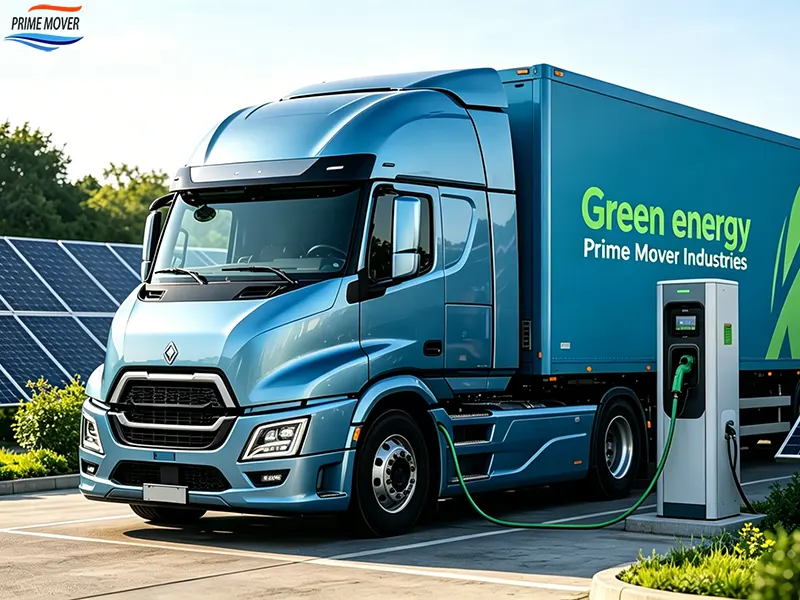
Fully electric semi-trailers integrate substantial battery packs and electric drivetrains directly into the trailer chassis. These systems are designed to provide propulsion assistance to the tractor, significantly reducing fuel consumption and emissions regardless of whether the tractor is diesel-powered or battery-electric.
Trailer Dynamics, a German technology company, has emerged as a leader in this space. Its eTrailer system features an electric axle with two motors and individually controlled wheels, along with batteries and drivetrain control managed via the trailer kingpin. The system is offered with three battery pack sizes—180, 367, and 550 kWh—with prices ranging from $140,000 to $220,000.
The performance figures are compelling. When coupled with a battery-electric tractor, the eTrailer can effectively double the range from approximately 400 km to over 800 km. With a diesel tractor, fuel consumption reductions range from 30% on flat roads with light loads to 50% on hilly terrain with heavy loads.
In recognition of its potential, the eTrailer won the European Transport Prize for Sustainability 2026 in the "Trailers and Superstructures" category. Major logistics players have taken notice: DB Schenker pre-ordered 2,000 eTrailers, while Mars Logistics signed an MoU for 500 units. Series production is scheduled to begin in 2026.
Path Two: The Propelled/Assisted Semi-Trailer
A complementary approach focuses on "propelled" or "assisted" semi-trailers that provide propulsion support without the massive battery packs of fully electric systems. These solutions are designed to lower the barrier to entry by reducing cost, weight, and infrastructure requirements.
In June 2026, TIP Group, Nivalis Energy Europe, and BPW launched a pilot trial of a propelled semi-trailer with German transport operator Sommer. The Nivalis Powered Trailer Kit transforms a standard trailer into an intelligent, self-assisting unit that actively contributes to its own movement—reducing the energy demand on the tractor engine without adding significant weight or changing how the driver operates the vehicle.
What sets this system apart is its triple-source energy harvesting:
- Regenerative braking via the e-axle
- Solar energy from a full-roof array of photovoltaic panels generating up to 3.7 kWp
- Grid connection via a 32A AC three-phase connection during parking stops
An onboard Energy Management Unit orchestrates all power flows, while a telematics platform gives fleet managers full visibility of energy generation, savings, and system health.
The system targets fuel consumption reductions of up to 7,000 liters of diesel per trailer annually—translating to CO₂ savings of up to 18 tons per trailer per year. As Pavel Gilman, Vice President Sales & Marketing at Nivalis Energy Europe, explained: "We want to showcase how the transport industry can step-by-step release itself from fossil fuels without exceptional investments and changes to infrastructure".
E-Axle Technology: The Heart of Electric Trailers
At the core of both approaches lies the electric axle (e-axle) —a technology that integrates electric motors, power electronics, and sometimes batteries directly into the trailer's axle assembly. This allows trailers to become active participants in propulsion and energy management rather than passive cargo carriers.
The benefits of e-axle technology are multifaceted:
- Regenerative Braking: E-axles can recover kinetic energy during braking and convert it into electricity stored in batteries. The mass of a loaded truck-and-trailer combination makes regenerative braking far more impactful than in passenger vehicles. This recovered energy can power trailer accessories, support propulsion, or supply refrigeration units.
- Propulsion Assistance: E-axles provide supplemental torque to assist the prime mover, particularly during acceleration and hill climbs—scenarios where diesel engines are least efficient.
- Zero-Emissions Operation: In some configurations, e-axles enable fully electric operation for short distances or urban deliveries.
Major manufacturers are racing to bring e-axle solutions to market. ZF's TrailTrax system integrates a 210 kW electric axle, trailer EBS, battery box, and control unit into a complete trailer system. SAF-HOLLAND has developed the SAF TRAKr, an electrified trailer axle that works both as an OEM part and for retrofitting. Range Energy has partnered with ZF to integrate the AxTrax 2 e-axle into its eTrailer System for the North American market.
Real-World Deployments: From Pilots to Commercial Rollouts
The electric semi-trailer is moving rapidly from the laboratory to the road. Across Europe and beyond, pilot projects and commercial deployments are demonstrating the technology's viability.
Switzerland's First E-Trailer
Swiss logistics operator Schöni Transport partnered with Trailer Dynamics to launch Switzerland's first operational E-Trailer pilot in 2026. Following successful field testing in Finland and Norway, the E-Trailer entered real-world service on the route between Rothrist, Switzerland and the Milan region of Italy.
The results are striking: diesel-powered tractor units paired with the trailer are expected to achieve an average 40% reduction in fuel consumption, alongside a similar reduction in tank-to-wheel CO₂ emissions. Perhaps most significantly, the E-Trailer can increase the range of electric articulated trucks by up to 100%, effectively doubling operational distance. The system supports DC charging of up to 350 kW, enabling rapid charging for long-distance freight applications.
Daniel Schöni, the company's owner, said: "With the launch of the Swiss pilot project, we are sending a clear signal: We are not just testing new technologies, we are already thinking about the next steps".
Electric Refrigerated Trailers
The refrigerated transport sector has been an early adopter of electric trailer technology. Schmitz Cargobull has presented its all-electric S.KOe COOL refrigerated semi-trailer, featuring an electric refrigeration unit with integrated power electronics, a high-voltage battery system, and an optional electric generator axle. The axle recovers energy during braking and certain driving conditions, extending the refrigeration system's operation and reducing charging time.
The added battery weight is nearly offset by the removal of the conventional generator, preserving payload capacity and space for up to 36 pallets. The version with a generator axle has received type approval, enabling safe and environmentally compliant operation without additional authorizations.
VE Motion: An Australian Solution
Australian company VE Motion has taken a different approach, offering a modular, self-contained e-axle solution that adds a 295 kW (~395 hp) electric motor to new or existing trailers. The system works like a plug-in hybrid, using the electric motor to boost propulsion when most effective and recovering energy through regenerative braking.
The VE Motion system is designed for flexibility: it can be retrofitted onto existing trailers and operates behind both diesel and fully electric semi trucks. A base trailer kit ships with a 200 kWh battery pack and starts at under 200,000 AUD—roughly a quarter of the price of a battery-electric truck. The system can cut fuel use by up to 50%.
The Economics: Total Cost of Ownership
For fleet operators, the promise of electric semi-trailers ultimately comes down to economics. The total cost of ownership (TCO) equation is increasingly favorable.
Fuel Savings
The fuel savings from electric semi-trailers are substantial. The Nivalis system targets fuel consumption reductions of up to 7,000 liters of diesel per trailer annually. At current diesel prices, this represents annual savings of approximately $7,000–$10,000 per trailer—a compelling return on investment.
Purchase Price vs. Operating Costs
The upfront cost of electric semi-trailers remains a barrier. Trailer Dynamics' eTrailer ranges from $140,000 to $220,000, compared to $30,000–$80,000 for a conventional cargo semi-trailer. However, the total cost of ownership tells a different story.
As Trailer Dynamics managing director Michael Nimtsch noted: "Electric mobility in heavy duty transport is still more expensive than diesel. For this reason, we currently offer our eTrailers almost exclusively through rental or leasing models". This approach lowers the barrier to entry while allowing fleets to capture the operational savings.
Government Incentives
Government incentives are playing a crucial role in accelerating adoption. In the United States, fleet operators can access a $40,000 federal tax credit for electric commercial vehicles, with state voucher programs offering up to $185,000 per truck. California's Clean Fuel Reward program offers point-of-sale rebates of up to $120,000 for electric commercial trucks.
In Europe, incentives are equally robust. Austria offers up to 80% of vehicle purchase price subsidies, Belgium provides subsidies for up to 32% of the truck price, and Ireland covers 30–60% of the upfront cost difference versus diesel equivalents.
These incentives, combined with lower operating costs, are rapidly improving the business case for electric semi-trailers. As one analysis noted, a new energy vehicle truck can save fleet operators up to 1.2 million yuan (about $165,000) over a ten-year life cycle compared to a diesel equivalent.
The Range Extension Opportunity
Perhaps the most transformative benefit of electric semi-trailers is their ability to extend the range of battery-electric trucks. This addresses one of the most persistent barriers to electric truck adoption: range anxiety.
The Trailer Dynamics eTrailer can double the range of a battery-electric tractor from 400 km to over 800 km. The Schöni Transport pilot similarly demonstrated the ability to increase range by up to 100%.
This range extension has profound implications for the freight industry. It means that battery-electric trucks—which have traditionally been limited to regional and short-haul routes—can now be deployed on long-haul operations without the need for en-route charging. As one industry observer noted, "efforts to lower emissions from freight operations are important, but making those operations more profitable is what will bring these new ideas to market successfully".
Challenges and Barriers
Despite the promise of electric semi-trailers, significant challenges remain.
Infrastructure
Charging infrastructure for heavy-duty electric vehicles is still in its early stages. Tesla plans to begin deploying its Megacharger network in selected locations during the first half of 2026, but widespread availability remains years away. As one analysis noted, "electric trucking's Achilles' heel remains infrastructure: until heavy-duty charging is widespread and dependable, diesel keeps its flexibility edge".
Interoperability
Mass adoption of electric semi-trailers is hindered by interoperability issues. Current designs often depend on tractor-specific CAN-data, limiting compatibility across OEMs and models. However, projects like the EU-funded CHANGE project are working to overcome this challenge by creating interoperable electrified semitrailers.
Weight and Payload
The additional weight of batteries and electric drivetrains can reduce payload capacity—a critical consideration for freight operators. However, manufacturers are working to offset this through lightweight materials and design optimization. Schmitz Cargobull, for example, has nearly offset the added battery weight by removing the conventional generator.
Cost
The premium for electric semi-trailers remains significant. While total cost of ownership calculations are increasingly favorable, the upfront cost barrier continues to deter many fleet operators. Rental and leasing models are emerging as a solution, but broader adoption will require continued cost reduction through economies of scale.
The Future Outlook
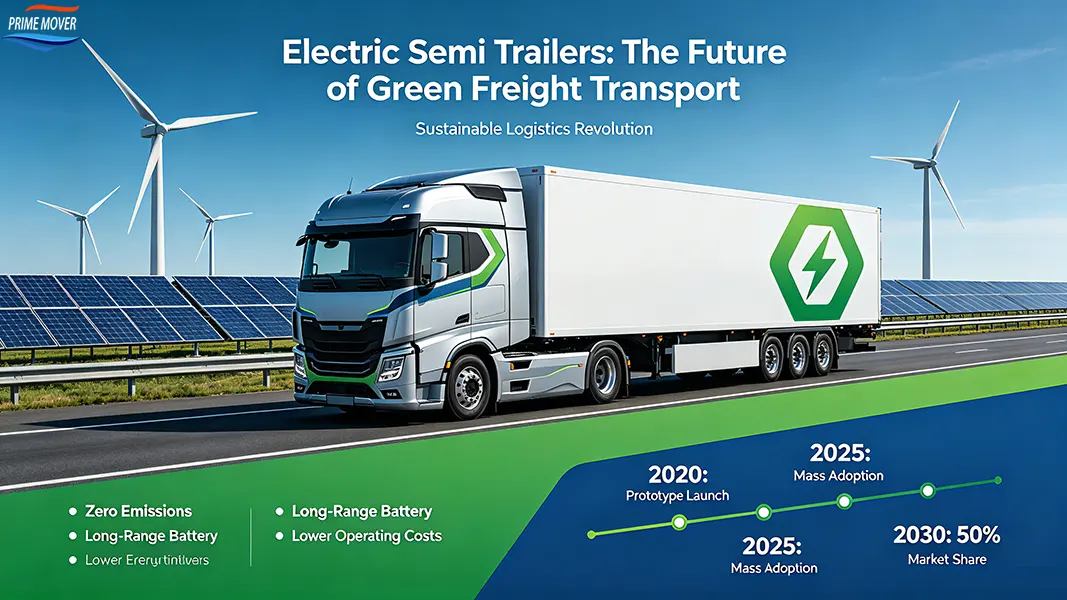
The electric semi-trailer market is poised for explosive growth over the next decade. With the market projected to reach $25 billion by 2035 and a CAGR of approximately 25%, the technology is moving from niche to mainstream.
Several trends will shape this growth:
- Continued Cost Reduction: As battery costs decline and manufacturing scales, the upfront cost premium for electric semi-trailers will shrink, making the technology accessible to a broader range of fleet operators.
- Regulatory Drivers: Increasingly stringent emissions regulations—particularly in Europe and North America—will accelerate adoption. The market share of electrified heavy-duty commercial vehicles is expected to increase from around 3% in 2025 to more than 5% in 2026.
- Technological Innovation: Advances in battery technology, e-axle design, and energy management systems will continue to improve performance, reduce weight, and lower costs.
- Integration with Autonomous Vehicles: As autonomous trucking technology matures, electric semi-trailers will play a crucial role in enabling self-driving freight operations.
- Expansion of Charging Infrastructure: Government and private investment in heavy-duty charging infrastructure will address one of the key barriers to adoption.
Conclusion
Electric semi-trailers represent a pragmatic, cost-effective path to decarbonizing the freight industry. By electrifying the trailer rather than the tractor, this technology offers a bridge strategy that delivers immediate fuel savings and emissions reductions while allowing fleet operators to leverage their existing tractor investments.
With major logistics players like DB Schenker pre-ordering thousands of units, pilot projects demonstrating compelling performance gains, and government incentives improving the economics, the electric semi-trailer is moving from the fringes to the mainstream.
The technology is not without its challenges—infrastructure, interoperability, and upfront costs remain barriers. But the trajectory is clear: electric semi-trailers are poised to play a central role in the future of green freight transport.
For Prime Mover Industries, these developments represent both an opportunity and a responsibility. As a leading semi-trailer manufacturer, we are committed to investing in the technologies and partnerships that will enable our customers to navigate the transition to sustainable freight transport. The future of freight is electric—and we are proud to be part of the journey.
Ready to explore how electric semi-trailer technology can benefit your fleet? Contact Prime Mover Industries today to discuss your transport equipment needs.
Written by
Prime Mover Industries
Editor Wang
www.flatbed-semi-trailer.com
WhatsApp:+86-189 5386 6163
Email:wlei66@126.com
PRIME MOVER
INDUSTRIES LIMITED