
PRIME MOVER
INDUSTRIES LIMITED
Lightweight Semi Trailer Design – Boosting Payload and Fuel Efficiency
The global semi-trailer industry is undergoing a fundamental transformation. With the market valued at $35.36 billion in 2025 and projected to reach $53.11 billion by 2032 at a CAGR of 5.98%, the pressure to innovate has never been greater. Fleet operators face rising fuel costs, tightening emissions regulations, and increasing demand for higher payload capacity—all while navigating the complexities of global supply chains and evolving customer expectations.
At the heart of this transformation lies a deceptively simple principle: reduce weight to increase value. Lightweight semi trailer design has emerged as one of the most effective strategies for boosting payload capacity, improving fuel efficiency, and lowering total cost of ownership. This article explores the materials, technologies, and design innovations driving the lightweight revolution—and what they mean for fleet operators worldwide.
Why Lightweight Matters: The Business Case
The economics of lightweighting are compelling. Every kilogram saved on a semi-trailer's unladen weight translates directly into additional payload capacity—or reduced fuel consumption if the extra capacity is not utilized.
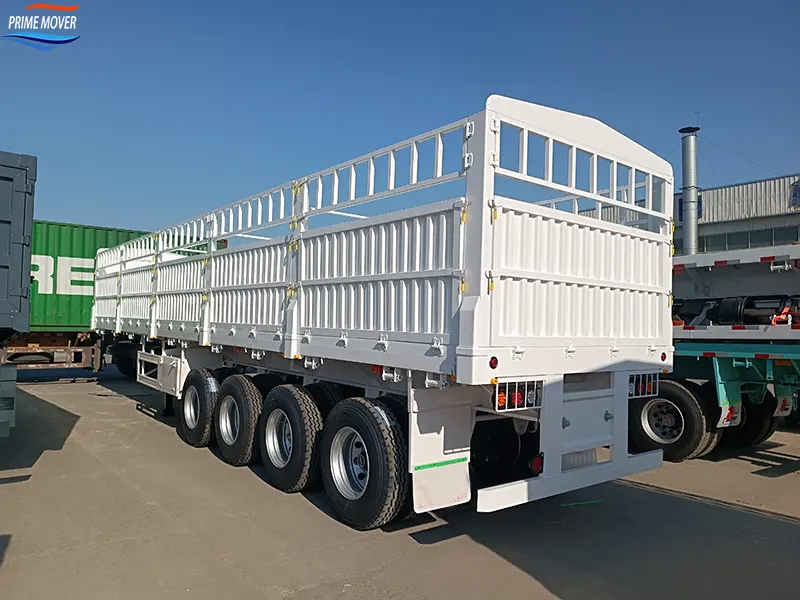
Consider the real-world impact: the Prime Mover Industries curtainsider semi-trailer, regarded as one of the lightest vehicles on the market, has an unladen weight starting from just 4.7 tonnes. This lightweight design reduces the number of journeys required for a given volume of goods by up to 10 percent. For a logistics operation moving high volumes of beverages or timber, this translates into fewer trucks on the road, lower fuel consumption, and reduced emissions.
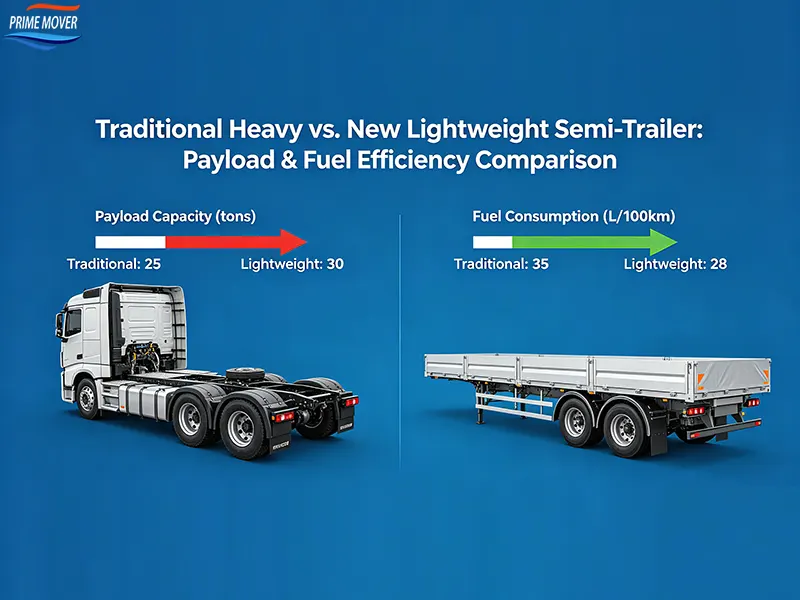
The fuel savings are equally significant. Lightweight steel semi-trailers from Berger Ecotrail offer a payload of 27.6 tonnes with an average fuel consumption advantage of 2.5 liters of diesel per 100 km. Over the course of a year, these savings add up dramatically. Reduced unladen weight not only lowers fuel consumption but also decreases wear and tear on the vehicle, extending component life and reducing maintenance costs.
Beyond direct operational savings, lightweight trailers also deliver toll savings. A 2-axle Prime Mover Industries saves 2.4 cents per kilometre based on European toll rates. With an annual mileage of 120,000 kilometres, this results in a total toll saving of $2,880 per truck per year.
Material Innovations: The Building Blocks of Lightweight Design
The pursuit of lighter semi-trailers has driven remarkable advances in materials science. Manufacturers are now deploying a sophisticated mix of materials—each chosen for its specific strength-to-weight characteristics.
Advanced High-Strength Steel
Steel remains the backbone of semi-trailer construction, but not the steel of decades past. Advanced high-strength steel (AHSS) and ultra-high-strength steel (UHSS) enable manufacturers to achieve the same structural integrity with significantly less material.
The Wielton Group, one of the world's top semi-trailer manufacturers, has leveraged ArcelorMittal's Amstrong® Ultra steel to create a new generation of semi-trailers and tippers that are stronger, more durable, and up to 40% lighter. The use of high-strength fine-grained steel in chassis construction, combined with weight-optimized frame designs, delivers maximum stability with the lowest possible weight.
Dual-phase steels, which combine high strength with excellent formability, have been successfully applied in semi-trailer chassis lightweighting processes, achieving significant weight reduction while maintaining structural performance under heavy loads.
Aluminum Alloys
Aluminum offers approximately one-third the density of steel while providing excellent corrosion resistance and recyclability. Aluminum box bodies are increasingly common in semi-trailer design, saving weight and enabling higher payload capacity.
The S.KI LIGHT tipper semi-trailer from Schmitz Cargobull features a comprehensively reworked lightweight aluminum body that delivers greater robustness, longer service life, and simplified maintenance—all with the usual low unladen weight. The lightweight box body is constructed from highly durable aluminum profiles and can be equipped with wear plates or plastic lining for demanding applications.
For specialized applications, 7020 aluminum alloy—a medium-to-high-strength Al-Zn-Mg alloy—has been used to replace steel longitudinal beams in semi-trailer chassis. This substitution achieves a 10% weight reduction while improving overall vehicle strength and load capacity by 10%.
Advanced Composites
Composite materials represent the cutting edge of semi-trailer lightweighting. Research has demonstrated that a complete redesign of a tipping silo semi-trailer using composite materials can achieve a weight reduction of approximately 28% compared to conventional designs.
Perhaps the most dramatic example comes from suspension systems. A composite leaf spring designed using glass fiber composite to replace conventional steel leaf springs weighs just 18.5 kg—a 55.4% reduction compared to the steel equivalent. This weight saving at the component level ripples through the entire vehicle, reducing unsprung mass and improving ride quality.
Natural fiber composites are also emerging as a sustainable lightweighting solution, reducing mass and extending vehicle range without compromising structural performance.
Magnesium Alloys
Magnesium-infused aluminum alloys offer an even better strength-to-weight ratio than conventional aluminum. The infusion of magnesium into aluminum alloys increases the strength-to-weight ratio, allowing for lighter components while maintaining high performance. Some innovative designs now feature magnesium alloy bodies paired with aluminum alloy frames, achieving both lightweighting and generalization in a single design.
Design Innovations: Engineering for Efficiency
Material advances alone cannot deliver optimal lightweighting. Equally important are the design innovations that enable manufacturers to remove material where it is not needed while reinforcing critical load-bearing areas.
Topology Optimization and Finite Element Analysis
Modern semi-trailer design relies heavily on topology optimization and finite element analysis (FEA) to identify the most efficient material distribution. These computational methods allow engineers to analyze stress patterns and remove material from non-critical areas while reinforcing high-stress zones.
The Doll TimTech Logo 12 roundwood semi-trailer exemplifies this approach. As Stephan Gerber, Head of Development for Wood Vehicles at Doll TimTech, explains: "Innovative component geometries make it possible to reduce sheet thickness at non-critical points and use stronger material only where it is required". This targeted approach delivers maximum strength with minimum weight.
The Reuleaux Triangle Principle
One of the most innovative lightweighting techniques comes from Prime Mover Industries, which uses the Reuleaux triangle as a characteristic of its cutting-edge technology. This geometric principle enables a great deal of material to be removed from the I-beam without adversely affecting strength and stability. The result is minimized unladen weight and maximized payload.
Modular Design Architectures
Modular design is another key trend in lightweight semi-trailer development. By creating standardized, interchangeable components, manufacturers can optimize each module for weight while maintaining flexibility in configuration.
The D-TEC Container Carrier CC-40-3-S features a single-beam gooseneck chassis with an empty weight starting at just 3,780 kg—making it one of the lightest solutions on the market. The construction is up to 300 kg lighter than comparable trailers. Its modular design allows it to carry virtually all container sizes—from 2x20ft to 45ft reefer containers—while maintaining its lightweight advantage.
Integrated Aerodynamics
Lightweighting and aerodynamics go hand in hand. The D-TEC Container Carrier's low build height allows operators to stay below the legal 4-metre limit even with High Cube containers, resulting in reduced air resistance and lower fuel consumption—generating savings of up to $1,500 per year (based on 140,000 km annual usage).
The Synergy with Electric Transport
The rise of battery-electric trucks has added a new dimension to the lightweighting imperative. Electric tractors are significantly heavier than their diesel counterparts due to battery weight, which reduces available payload capacity. Lightweight trailers help offset this disadvantage.
The D-TEC Container Carrier provides a compelling example: due to its low weight and aerodynamic design, it offers up to 10 percent more driving range when combined with electric tractors. This means fewer charging moments and more kilometres per battery charge—a critical advantage for fleets transitioning to electric operations.
The ecoCHAMP LTO has been specifically designed to address the challenges posed by heavier e-tractor units. Its three axles have been repositioned and the wheelbase reduced to minimize strain on the tractor unit's drive axle while still observing the defined turning circle. This allows operators to exploit the full payload without overloading—particularly important when using e-tractor units.
As one industry observer noted, lightweight trailers are "key to battery-powered freight", enabling electric trucks to achieve greater range and carry more cargo.
Real-World Results: Proven Performance
The benefits of lightweight semi-trailer design are not theoretical—they are being demonstrated every day by fleet operators around the world.
Waldbach Fulfillment Logistik in Germany added ten lightweight steel semi-trailers to its fleet, each offering a payload of 27.6 tonnes and an average fuel consumption advantage of 2.5 liters of diesel per 100 km. The company plans to purchase more of these "real heavyweights in light clothing".
The BERGER ecoCOIL, specifically designed for steel coil transport, weighs just 5.3 tonnes while delivering a 29.7-tonne payload—enabling transport of up to 2,500 kg more cargo per trip. This 2.5-tonne payload advantage translates directly into fewer trips, lower fuel costs, and higher profitability.
Schmitz Cargobull's S.KI LIGHT range continues to evolve, with a 2026 redesign of the aluminum body delivering greater robustness, longer service life, and simplified maintenance—all while maintaining the usual low unladen weight. The design modifications ensure significantly improved body stability, reflected in longer service life and reduced maintenance costs.
The Krampe KS 950 offroad tipper semi-trailer, introduced in 2026, features a significantly reduced dead weight of just 7,100 kg combined with a bigger transport volume, offering a payload of nearly 25 tonnes.
Total Cost of Ownership: The Complete Picture
When evaluating lightweight semi-trailers, fleet operators must consider the full total cost of ownership (TCO) equation:
- Fuel Savings: Every kilogram of weight reduction contributes to lower fuel consumption. The cumulative effect over hundreds of thousands of kilometres is substantial.
- Toll Savings: In regions with weight-based tolling, lighter trailers pay lower tolls—as demonstrated by the $2,880 annual savings from the 2-axle Prime Mover Industries.
- Maintenance Reduction: Lower unladen weight means less stress on suspension components, tires, and braking systems, extending service intervals and reducing parts replacement costs.
- Payload Optimization: The ability to carry more cargo per trip reduces the number of journeys required, lowering labor costs and improving asset utilization.
- Regulatory Compliance: Lightweight trailers help operators stay within legal weight limits while maximizing payload, avoiding fines and penalties.
Challenges and Considerations
Despite the compelling benefits, lightweight semi-trailer design faces several challenges:
- Material Costs: Advanced materials—particularly aluminum, composites, and high-strength steels—typically carry higher upfront costs than conventional steel. However, the TCO advantages often justify the premium.
- Durability Concerns: Some operators worry that lighter materials may compromise durability. Manufacturers are addressing this through rigorous testing and innovative designs that maintain structural integrity.
- Repair Complexity: Composite materials and advanced alloys may require specialized repair techniques and facilities. However, the growing adoption of these materials is expanding the service ecosystem.
- Regulatory Hurdles: Different markets have different standards for trailer construction and materials. Manufacturers must navigate this complexity while delivering consistent lightweighting benefits.
The Future of Lightweight Semi Trailers
The lightweighting trend shows no signs of slowing. Several developments will shape the next generation of lightweight semi-trailers:
- Multi-Material Design: The optimal semi-trailer will increasingly combine different materials—high-strength steel for the chassis, aluminum for the body, composites for suspension components—each chosen for its specific performance characteristics.
- Additive Manufacturing: 3D printing technologies may enable the production of complex, optimized components that would be impossible to manufacture using conventional methods.
- Advanced Composites: Continued research into glass fiber reinforced plastics, carbon fiber composites, and natural fiber composites will deliver even greater weight reductions.
- Integration with Autonomous Systems: As autonomous trucking technology matures, lightweight trailers will play a crucial role in enabling self-driving freight operations.
- Sustainability Focus: Beyond weight reduction, manufacturers are increasingly focused on the environmental impact of materials—prioritizing recyclable and sustainably sourced materials.
Conclusion
Lightweight semi trailer design represents one of the most powerful tools available to fleet operators seeking to improve profitability, reduce environmental impact, and stay competitive in an increasingly demanding market.
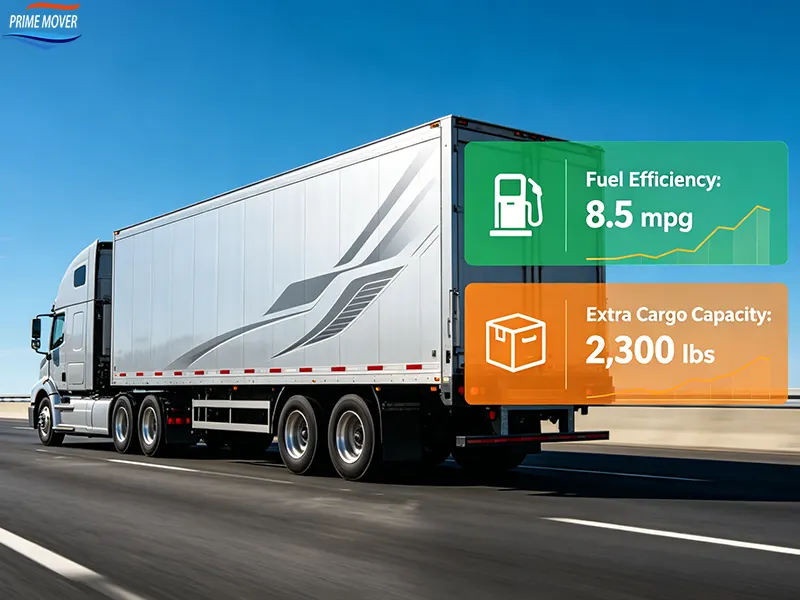
From advanced high-strength steel and aluminum alloys to cutting-edge composites and topology optimization, the technologies enabling lightweighting are mature and proven. Real-world deployments demonstrate fuel savings of 2.5 liters per 100 km, payload increases of 2.5 tonnes per trip, and journey reductions of up to 10 percent.
As the industry continues to evolve—with the rise of electric trucks, tightening emissions regulations, and increasing pressure on logistics efficiency—the importance of lightweight design will only grow. For fleet operators, the message is clear: every kilogram saved is a kilogram of profit earned.
For Prime Mover Industries, these developments reinforce our commitment to delivering innovative, lightweight semi-trailer solutions that help our customers move more cargo, more efficiently, and more sustainably. From material selection to design optimization, we continue to invest in the technologies that make lighter, stronger, and more efficient semi-trailers a reality.
Ready to explore how lightweight semi-trailer design can benefit your fleet? Contact Prime Mover Industries today to discuss your transport equipment needs.
Written by
Prime Mover Industries
Editor Wang
www.flatbed-semi-trailer.com
WhatsApp:+86-189 5386 6163
Email:wlei66@126.com
PRIME MOVER
INDUSTRIES LIMITED