
PRIME MOVER
INDUSTRIES LIMITED
Heavy-Duty Trailer Market to Hit $21 Billion by 2032 – Growth Drivers Explained
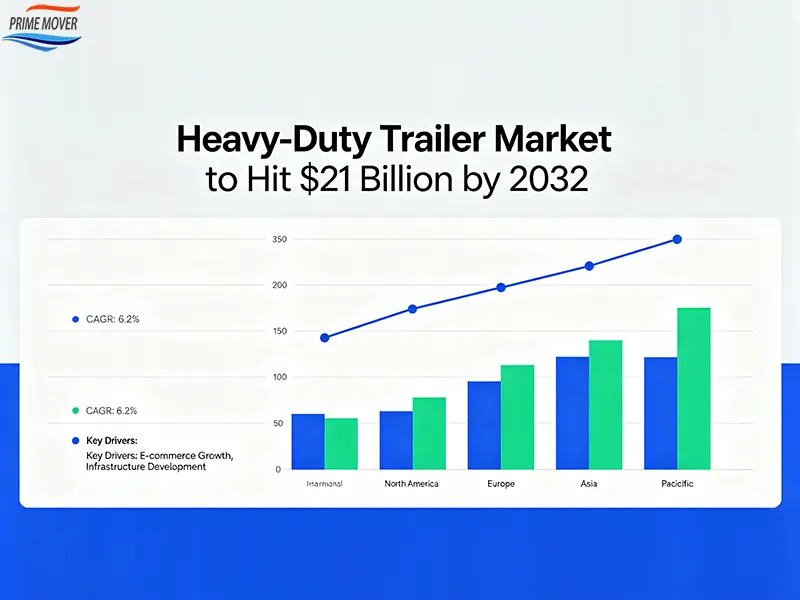
The global heavy-duty trailer market is on a steady growth trajectory, with industry analysts projecting it to reach $21.1 billion by 2032, up from $12.9 billion in 2022—representing a compound annual growth rate (CAGR) of 5.1% from 2023 to 2032.
While these numbers reflect a healthy industry, they also signal a period of intense pressure on global logistics networks. As international trade routes expand and infrastructure projects reach new heights, the specialized vehicles that move the world are in shorter supply than ever before. This article explores the key growth drivers, emerging trends, and strategic considerations shaping the heavy-duty trailer market through 2032.
Market Overview: Steady Growth Amid Rising Demand
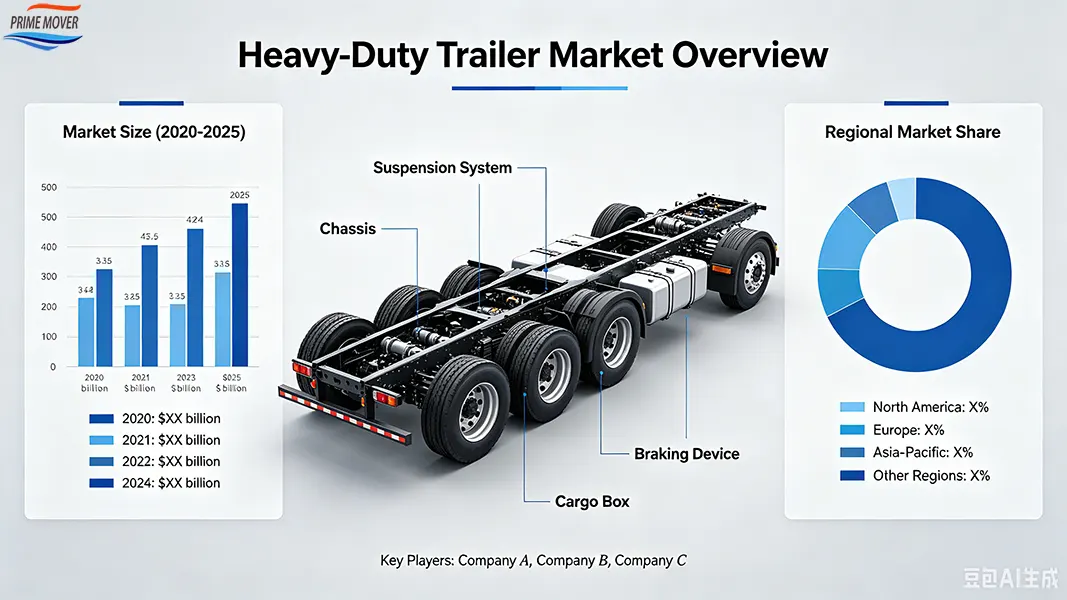
Heavy-duty trailers are designed to handle oversized cargo and large loads, making them essential to the modern world of logistics and transportation. The market encompasses a diverse range of trailer types, including flatbed trailers, lowboy trailers, refrigerated trailers, dry van trailers, and others.
In 2022, flatbed trailers dominated the global market in terms of revenue, a position they are expected to maintain throughout the forecast period. By axle configuration, the below 3-axle segment accounted for the major share, while in terms of payload capacity, the 40,000 to 80,000 lbs. segment is anticipated to lead the market.
Regionally, Asia-Pacific is the highest revenue contributor, followed by Europe, North America, and LAMEA (Latin America, Middle East, and Africa).
Key Growth Drivers
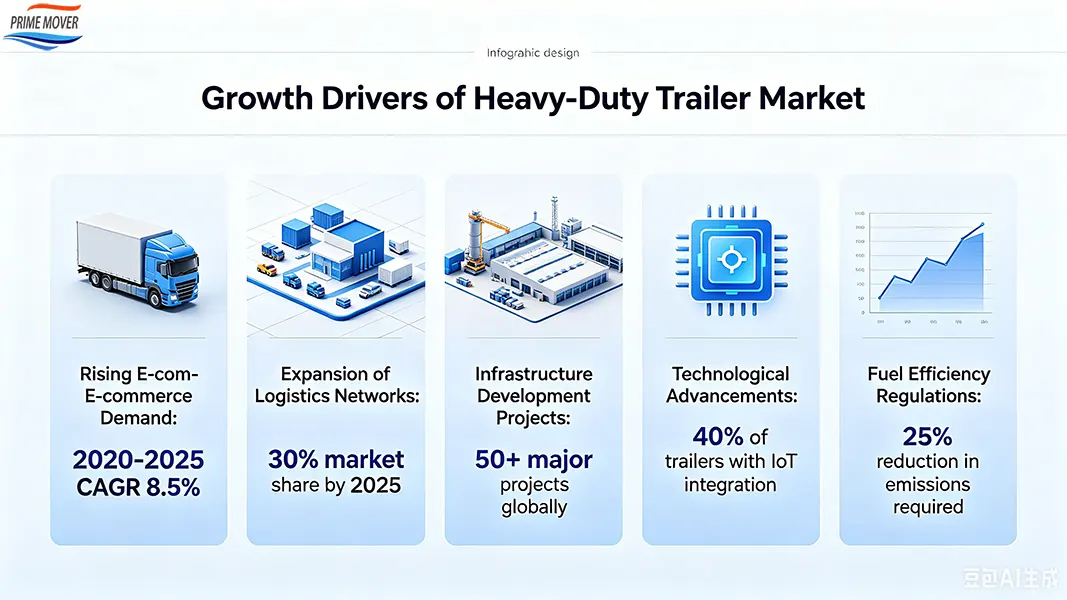
1. Infrastructure Development and Urban Expansion
One of the most powerful drivers of heavy-duty trailer demand is the global surge in infrastructure development. As emerging economies expand their industrial sectors and build new power plants, highways, and urban centers, there is an upsurge in the need for transporting heavy machinery, construction materials, and oversized cargo.
Moving massive equipment—from wind turbine blades to construction cranes—requires specialized steel-framed trailers capable of handling extreme weights and dimensions. This demand is particularly pronounced in the Asia-Pacific region, where rapid urbanization and industrialization continue to accelerate.
2. Globalization and International Trade
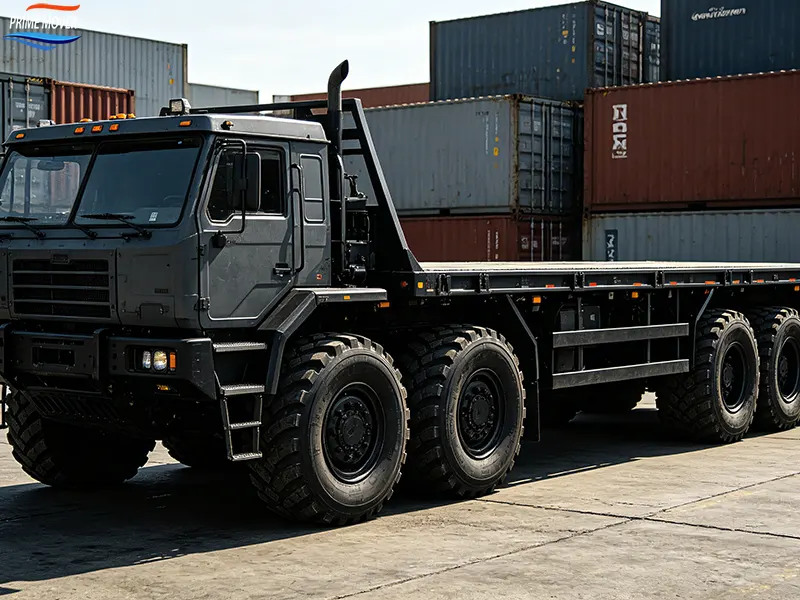
The integration of global supply chains has intensified the demand for heavy-duty trailers. The need to transport goods over long distances—often involving shipping containers—has made specialized heavy-duty trailers crucial for moving containers from ports to distribution centers, enabling the smooth flow of goods in the global marketplace.
As international trade volumes continue to rise, the heavy-duty trailer market is estimated to continue growing at a moderate but steady rate.
3. Expansion of Logistics and E-Commerce
The growth of the logistics sector, cold chain transport, industrialization, and e-tailing (online retail) are all contributing to increased demand for heavy-duty trailers. The expansion of logistics networks and the need for efficient transportation solutions across various industries have created sustained demand for reliable, high-capacity trailers.
4. Fleet Modernization and Replacement Cycles
Aging trailer fleets across many markets are driving replacement demand. After years of deferred investment, fleet operators are increasingly prioritizing equipment modernization to improve efficiency, reduce maintenance costs, and comply with evolving regulatory standards.
5. Economic Growth in Emerging Markets
Economic expansion in developing countries is creating new demand for heavy-duty transportation solutions. As these economies build their industrial bases and infrastructure, the need for heavy machinery transport—and the specialized trailers required to move it—continues to grow.
Technological Trends Reshaping the Industry
Lightweight Materials and Advanced Alloys
Fleet operators are seeking ways to reduce their carbon footprint while maintaining high payload capacities. This has forced manufacturers to invest heavily in research and development to create trailers that are lighter yet stronger, using advanced alloys to improve fuel efficiency without sacrificing the ability to carry massive loads.
The trend toward lightweighting is not just about fuel savings—it also enables operators to maximize payload capacity within legal weight limits, directly improving profitability per trip.
Telematics and Automation
We are seeing a surge in the use of telematics and automation within the heavy-duty trailer market. These systems allow operators to track cargo weight, tire pressure, and structural integrity in real time. For project managers moving heavy loads, this data is vital for safety and regulatory compliance.
Advanced telematics solutions enable:
- Real-time load monitoring to prevent overloading and optimize weight distribution
- Predictive maintenance to reduce downtime and extend equipment life
- Route optimization to improve fuel efficiency and delivery reliability
- Enhanced safety through continuous monitoring of critical systems
Specialization and Niche Innovation
The market is increasingly divided into specialized segments based on the specific needs of different cargo types. Lowboy trailers are seeing significant interest due to their low deck height, which is essential for tall and heavy items as it maintains a low center of gravity. This design is critical for safely moving oversized industrial parts under highway overpasses and through tight urban corridors.
Other manufacturers are focusing on specific niches like refrigerated transport and dry vans, with the most intense competition remaining in the high-capacity sector where payloads exceed 80,000 pounds.
Regional Market Dynamics
Asia-Pacific: The Growth Engine
Asia-Pacific currently stands as the highest revenue contributor to the global heavy-duty trailer market. The region's rapid industrialization, urbanization, and infrastructure investment continue to drive demand for heavy-duty transportation solutions. As emerging economies in the region build new power plants and highways, demand for heavy-duty trailers is only expected to intensify.
North America and Europe: Mature but Steady
North America and Europe represent mature markets with steady demand driven by fleet replacement cycles, regulatory compliance, and technological adoption. These regions are at the forefront of innovation in lightweight materials, telematics, and sustainable trailer design.
LAMEA: Emerging Opportunities
The LAMEA region (Latin America, Middle East, Africa) presents growing opportunities as infrastructure development accelerates and industrial sectors expand.
Challenges and Risks
While the heavy-duty trailer market offers significant opportunities, it also faces several challenges:
Geopolitical Disruptions and Material Shortages
The conflict between Russia and Ukraine has sent shockwaves through the automotive and manufacturing sectors, disrupting the global steel supply chain and leading to sharp price increases and material shortages. For manufacturers, these rising costs make it difficult to maintain steady production levels while keeping prices predictable for customers.
When steel is expensive or unavailable, the delivery of new trailers slows down. Many logistics firms now face waits for specialized equipment that can last many months, threatening the timelines of critical infrastructure projects.
Regulatory Compliance
The heavy-duty trailer industry is subject to stringent safety and environmental regulations that vary by region. Compliance costs continue to rise, and the pace and scope of emissions mandates create uncertainty for manufacturers and fleet operators alike.
Volatile Raw Material Prices
Beyond steel, the industry faces volatility in prices for other raw materials, including aluminum, synthetic rubber, and electronic components. These fluctuations affect cost structures and profitability throughout the supply chain.
Strategic Outlook for Industry Players
For manufacturers, fleet operators, and investors, the heavy-duty trailer market through 2032 presents both opportunities and strategic considerations:
- For Manufacturers: Success will depend on innovation in lightweight materials, investment in telematics and automation, and the ability to navigate regulatory complexity while managing raw material costs.
- For Fleet Operators: The current period of elevated demand and potential equipment shortages makes early procurement planning essential. Investing in telematics-equipped trailers can deliver long-term operational savings through improved efficiency and reduced maintenance.
- For Buyers: Understanding total cost of ownership—including fuel efficiency gains from lightweight designs, maintenance savings from predictive telematics, and regulatory compliance requirements—is critical for making informed purchasing decisions.
Conclusion
The global heavy-duty trailer market is poised for steady growth through 2032, with the market projected to reach $21.1 billion at a CAGR of 5.1%. Key growth drivers—including infrastructure development, globalization, logistics expansion, and fleet modernization—are creating sustained demand across all major regions.
However, the industry must contend with significant challenges: geopolitical disruptions affecting raw material supplies, rising regulatory compliance costs, and the need for continuous technological innovation. The road ahead is paved with both opportunity and volatility.
For Prime Mover Industries, these market dynamics reinforce our commitment to delivering high-quality, innovative heavy-duty trailers that meet the evolving needs of our global customers. From flatbed and lowboy designs to custom OEM solutions, we continue to invest in manufacturing excellence and technological advancement—helping our partners navigate the challenges and opportunities of this growing market.
Looking for a reliable heavy-duty trailer manufacturer for your fleet? Contact Prime Mover Industries today to discuss your transport equipment needs.
Written by
Prime Mover Industries
Editor Wang
www.flatbed-semi-trailer.com
WhatsApp:+86-189 5386 6163
Email:wlei66@126.com
PRIME MOVER
INDUSTRIES LIMITED