
PRIME MOVER
INDUSTRIES LIMITED
How to Choose the Right Semi-Trailer for Your Business
Choosing the right semi-trailer is a strategic decision that impacts business safety and profitability. A wrong choice can lead to lost freight orders, increased operating costs, and even compliance risks. This guide will help you systematically analyze your needs and make an informed choice.
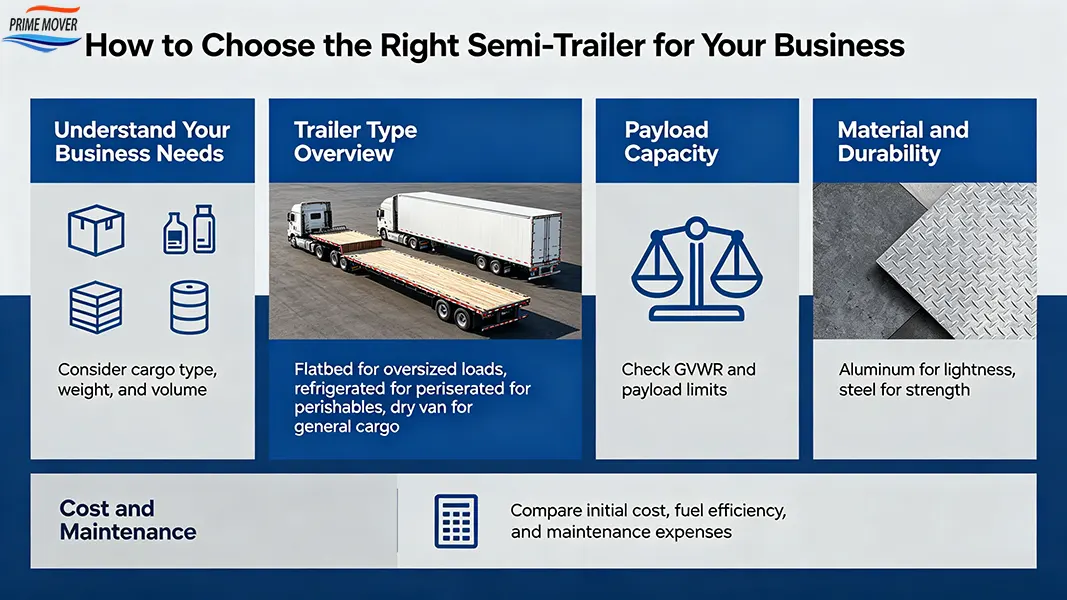
1: Understanding Your Cargo and Operational Needs
Start by answering the following questions:
- What are you transporting? What type of cargo (e.g., building materials, machinery, cold chain food, liquids, etc.)?
- How heavy is it? The total weight of the cargo is key to determining the number of axles, suspension, and load-bearing capacity.
- Where are you going? Is the route long-distance highway transport or short-distance regional transport with complex road conditions?
- How are you loading and unloading done? Is loading and unloading from above (crane) or from the side (forklift)?
2: Understanding Common Semi-Trailer Types
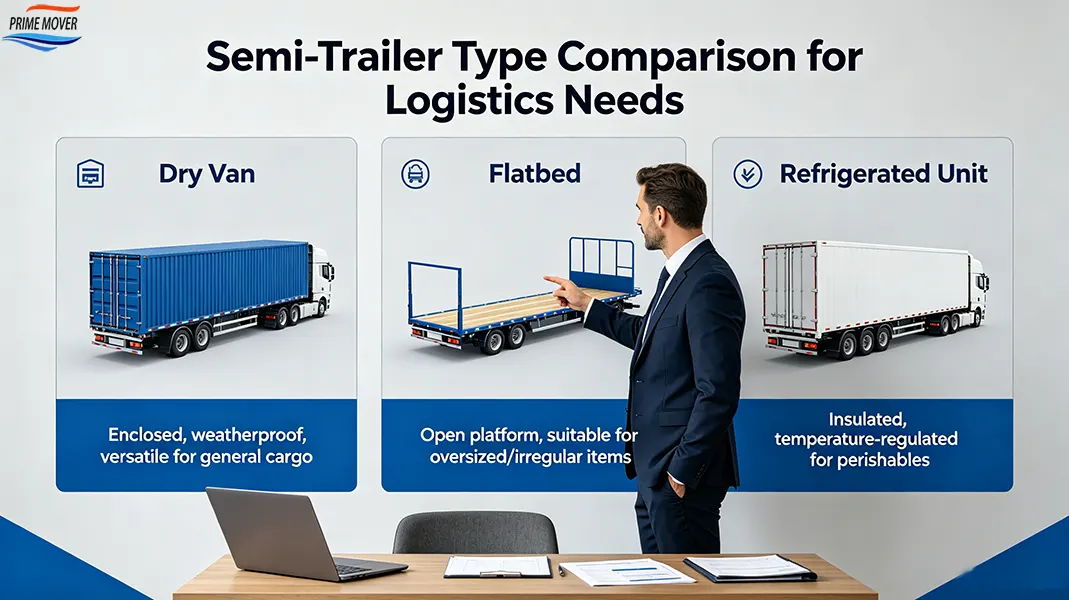
The following are several mainstream semi-trailer types and their core parameters:
| Vehicle Type | Typical Dimensions (L×W×H/Floor Height) | Typical Load Capacity | Applicable Cargo |
| Flatbed Trailer | 48-53ft × 8.5ft; Floor height approx. 60in | 45,000 - 48,000 lbs | Steel, timber, large equipment, building materials, and various cargo that can be loaded from above or the side. |
| Step Deck/High-Low Board Trailer | 48-53ft × 8.5ft; Top board height 60in, bottom board height 36-48in | Approx. 43,000 lbs | Cargo exceeding the height limit of a flatbed trailer, such as large machinery and engineering equipment. |
| Lowboy Trailer | 8.5ft wide; floor height only 18-24in | 40,000 - 80,000+ lbs | For extra-height and extra-heavy construction machinery, such as bulldozers and excavators. |
| Dry Van | 48-53ft × 8.5ft × 13.6ft | 42,000 - 45,000 lbs | For boxed and palletized general cargo, retail goods, etc. |
| Refrigerated Trailer | 48-53ft × 8.5ft × 13.6ft | 41,000 - 44,000 lbs | For temperature-sensitive goods, such as agricultural products, dairy products, meat, pharmaceuticals, etc. |
| Dump Trailer | - | Varies by model | For bulk materials, such as sand, soil, grain, etc. |
| Tanker | - | Varies by model | For liquid, gas, or powder cargo. |
3: Selection Process and Key Considerations
1. Evaluate Purchase, Lease, or Rental
Choose based on business stability and financial situation:
- Lease: Suitable for short-term, seasonal, and temporary needs; offers the highest flexibility and less maintenance responsibility.
- Take-a-Purchase/Financial Lease: Suitable for stable business with needs lasting more than one year; allows for cost amortization.
- Purchase: Suitable for long-term stable business, high utilization, and specific configuration requirements; lower long-term ownership costs.
2. Focus on Axle and Suspension Configuration
- Number of Axles: Directly affects load capacity and stability. For example, for a low-bed trailer, 3 axles are suitable for approximately 35 tons of cargo, while 4 axles are a more balanced choice. Dump trailers often use tandem axles to handle heavy loads.
- Suspension Types: Mechanical suspension is robust and durable, suitable for harsh road conditions; Air suspension provides a smoother ride, suitable for delicate goods and long-haul highways.
3. Review Manufacturing Quality and Materials
- Materials: Aluminum trailers are lighter and more corrosion-resistant; Steel trailers are heavier, stronger, and easier to repair.
- Certifications: Check if the manufacturer has passed ISO 9001 or other quality management system certifications.
4. Verify Compliance and Certifications
Ensure the trailer complies with the regulations of the operating location:
- Dimensions and Weight: Comply with local restrictions on gross weight and axle load.
- Safety Devices: Such as ECE R48 lighting certification and R58 rear underrun protection required in the European market.
- Manufacturer Qualifications: Verify whether the manufacturer is a member of an industry association (such as NATM in the US) or has obtained official national production licenses.
5. Consider Total Cost of Ownership and Brand
- TCO: Evaluation should not only consider the purchase price but also long-term costs such as maintenance, fuel consumption, and resale value.
- Brand Value: Well-known brands typically have better craftsmanship, technology, and resale value. Emerging brands may offer better value, but require careful evaluation.
6. Examine Customization and Manufacturer Capabilities
- Customization Options: Based on business needs, select manufacturers that can provide modifications such as sidewalls, hydraulic ramps, and container locks.
- Manufacturer Evaluation: In addition to the product, examine their production capacity, quality control processes, after-sales support, and delivery record. If possible, in-person vehicle inspection is the best verification method.
Summary
Choosing the right semi-trailer is a systematic process of matching business needs with product characteristics. By clearly defining your transportation needs, understanding different vehicle types, and carefully evaluating costs, quality, and compliance, you can make an informed decision that supports the long-term development of your business.
Prime Mover Industries is committed to providing high-quality semi-trailers that meet global standards. Please feel free to contact us for more information about our products and customized services.
Written by
Prime Mover Industries
Editor Wang
WhatsApp:+86-189 5386 6163
Email:wlei66@126.com
PRIME MOVER
INDUSTRIES LIMITED