
PRIME MOVER
INDUSTRIES LIMITED
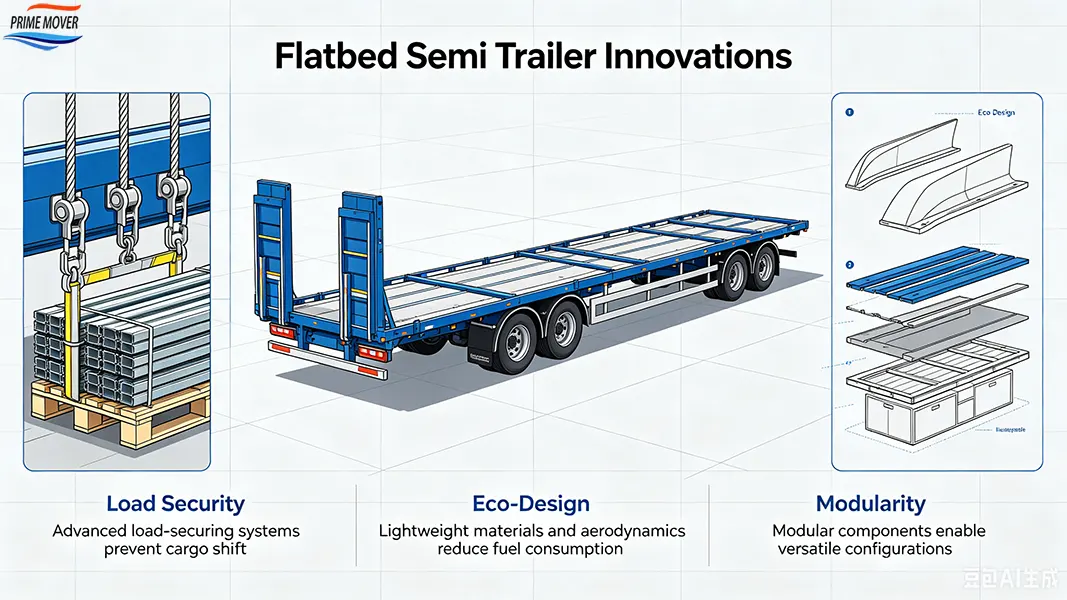
Flatbed Semi Trailer Innovations – Load Security, Eco-Design, and Modularity
The flatbed semi-trailer—one of the most versatile and widely used equipment types in global freight transport—is undergoing a quiet revolution. While often perceived as a straightforward "steel deck on wheels," today's flatbed trailers are being transformed by innovations in load security, eco-design, and modularity that are reshaping what fleet operators can expect from their open-deck assets.
The market reflects this momentum. The global flatbed semi-trailers market was valued at approximately $3.2 billion in 2022 and is projected to grow at an annual rate of 8.3% , according to Allied Market Research. Other projections place the market at $8.5 billion currently, with expectations to reach $15.6 billion by 2033 at a CAGR of 6.9% . This growth is being driven by increasing demands for flexible, efficient transportation solutions—and by the innovations that make flatbeds safer, greener, and more adaptable than ever before.
This article explores the three pillars of modern flatbed semi-trailer innovation—load security, eco-design, and modularity—and what they mean for fleet operators worldwide.
1. Load Security: Smarter, Safer Cargo Restraint
Load security has long been one of the most persistent challenges in flatbed operations. Cargo shifting during transit can lead to delays, damage, accidents, and significant financial losses. Today, a new generation of load securement systems is addressing these challenges with engineering precision and ergonomic design.
Prime Mover Industries: A Benchmark in Cargo Securing
Prime Mover Industries has set a new benchmark for trailer load safety with its Prime Safe system, which the company describes as widely adopted and proven across the Chian and Europe. The system is fully compliant with EN 12195-1, VDI 2700, and DIN EN 12642 Code XL—the European and German standards for safe cargo securing, lashing practices, and reinforced trailer construction.
At the heart of the system is Prime Lock, a versatile securing concept with integrated strapping points positioned every 10 cm along the trailer bed—accommodating a wide range of cargo shapes and sizes. The floor-mounted Prime Rail provides flexibility for irregular or mixed freight and simplifies partial unloading, while Multi Strap allows one person to lift, hold, and slide lashing straps along the trailer length, improving speed, ergonomics, and safety.
The benefits are tangible: Krone claims Prime Safe can reduce cargo damage, road incidents, and manual handling, potentially lowering insurance costs, improving operational reliability, and accelerating turnaround times at distribution hubs. The system also supports more sustainable logistics by reducing the use of single-use plastics and excess packaging.
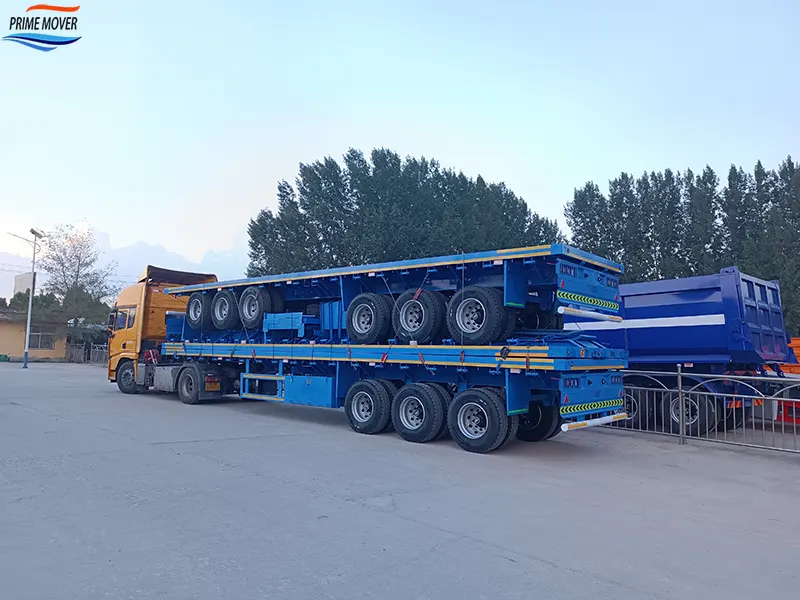
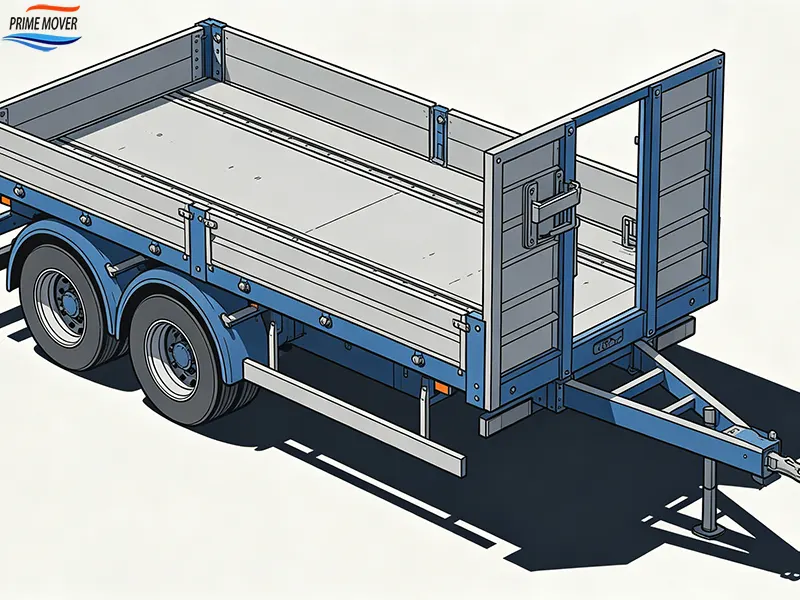
East Manufacturing's Integrated Double-L Side-Rail System
East Manufacturing has introduced a new integrated extruded aluminum side-rail system designed to accommodate a Double-L winch with flat-hook straps for cargo securement. Available on both sides of the East Beast or Beast II flatbed trailer, the flat hook tie-downs are interchangeable, allowing torque to be applied evenly to stabilize the load.
Each tie-down is movable, positioning exactly where needed to firmly secure cargo. Once a flat hook is engaged, the rail design holds the hook in place while tension is applied to the strap. The system maintains East's Securetight cargo control features—movable tie-downs across the top of the side rail provide positive locking every 8 inches. Critically, straps go inside, not over the top of the rail, protecting them from chafing against the winch hook and from shearing or cutting should the trailer be involved in a mishap. The side-rail system meets the 5,400-pound maximum load rating standard for flatbed trailers set by the Federal Motor Safety Administration.
Hyundai Translead's Latitude Flatbed
Hyundai Translead's completely redesigned Latitude Flatbed trailer is both lighter and stronger than previous models, with a focus on ease of use. Standard j-hooks and j-tracks as well as under-lighting enhance usability and load securement. The trailer is protected by a patent-pending high-impact side rail with a strong but lighter frame. An optional rolling tarp system and side ladders provide additional convenience and easier access to cargo—all available for retrofit on any flatbed through HT Aftermarket Genuine Parts.
Advanced Load Securement Components
Beyond integrated systems, the industry is seeing advances in individual load securement components. Ratchet tie-downs and cargo nets with higher breaking strengths—up to 3,000 pounds—are becoming standard, with some manufacturers reporting that these innovations have increased cargo safety significantly, minimizing loss claims for freight companies by as much as 25% .
Smart Load Monitoring
Load security is no longer just about physical restraints—it's also about data. For flatbeds with air ride suspension, pressure sensors can estimate axle weight in real time. Load sensors can track pressure, balance, and tilt while the truck moves. IoT systems record weight, routes, and load conditions in the background, giving fleets reliable data to show when regulators or clients ask.
Every new Great Dane flatbed comes standard with FleetPulseGO Track, an ultra-compact asset tracker for fleet visibility and asset recovery insights. Data-driven fleets can upgrade to FleetPulse PRO, a factory-installed, hard-wired trailer telematics platform that delivers real-time asset, safety, and cargo insights. Load monitoring improves safety, weight compliance, and utilization. As Brad Windy, Great Dane's Director of Application Engineering, puts it: "The ROI comes from eliminating surprises. That's what telematics delivers".
Enhanced Safety Standards
New safety standards have driven innovations such as anti-lock braking systems and enhanced visibility features. These advancements have contributed to a 12% reduction in accident rates since implementation. Stoughton's 53-foot intermodal chassis became the first trailer of its kind to qualify for the IIHS Toughguard award for superior rear underride protection—a standard applying to models built after April 2025. Underride guards that meet Toughguard criteria are substantially more likely to withstand an impact, reducing crash severity.
2. Eco-Design: Lightweight, Sustainable, and Fuel-Efficient
Sustainability has become a focal point in the logistics industry. Flatbed trailers made with recycled materials have surged in popularity. Research shows that consumers are 67% more likely to purchase from sustainable brands, making eco-friendly trailers a competitive advantage.
Lightweight Materials for Fuel Efficiency
The transition from traditional steel to advanced composite materials has led to a 20% reduction in trailer weight without compromising strength. This shift enhances fuel efficiency and improves payload capacity. The push towards lightweight structures has resulted in flatbed trailers that provide a measurable increase in fuel efficiency by approximately 15% on average—translating to substantial operational cost savings over time.
2026 flatbed semi-trailers are being built using high-strength steel, ensuring excellent load-bearing capacity while maintaining a relatively lightweight structure. This balance improves fuel efficiency and reduces operational costs—an essential factor for businesses looking to maximize profitability.
Advanced Aluminum and Composite Materials
The use of lighter, high-strength materials such as advanced aluminum alloys and composite panels has helped reduce trailer weight, supporting better fuel efficiency and allowing for heavier payloads within regulatory limits. East Manufacturing's extruded aluminum side-rail system is a prime example of how aluminum can deliver strength with reduced weight.
Hyundai Translead's Latitude Flatbed exemplifies this trend—the redesigned trailer is both lighter and stronger than previous models, featuring a patent-pending high-impact side rail with a strong but lighter frame.
Compatibility with Electric Tractors
The rising use of electric and hybrid tractors is encouraging manufacturers to design trailers compatible with regenerative braking systems and new axle configurations. The lightweight BERGERecotrail® ecoCHAMP LTO curtainsider semi-trailer—regarded as the lightest vehicle on the market—is ideally suited for use with e-tractor units. Lightweight flatbeds help offset the additional weight of electric tractor batteries, preserving payload capacity and extending range.
Aerodynamic Efficiency
Government regulations across North America and Europe have placed restrictions on fuel consumption and emissions from trailers. As a result, trailer makers are developing aerodynamic kits and side skirts that help reduce drag on highways. These design features, combined with lightweight construction, contribute to meaningful fuel savings over the life of the trailer.
Eco-Certified Materials
Manufacturers are increasingly using eco-certified materials in their flatbed trailers, attracting environmentally-conscious companies. This trend reflects a broader industry shift toward sustainability—not just as a regulatory requirement but as a competitive differentiator.
3. Modularity: Versatility Without Reinvestment
Modular trailer designs are gaining traction, offering companies the ability to adapt their flatbed to multiple types of freight without investing in new equipment. This approach maximizes fleet potential and versatility, enhancing return on investment.
Modular Construction for Quick Customization
Manufacturers are focusing more on modular construction to allow quicker customization of semi-trailers. This makes it easier for fleet operators to order trailers suited to specific cargo types without waiting for extensive production changes. Modular design reduces costs and enables fleets to respond rapidly to changing freight demands.
Stretch-Flatbed and Expandable Designs
Stretch-flatbed semi-trailers feature modular design that allows them to expand in length, typically ranging from 48 to 53 feet and beyond. This accommodates larger cargo without compromising stability or safety. The Fliegl SDS-H 480 Mega Tele three-axle flatbed semi-trailer can be telescoped by a full 7.5 meters—the maximum length of the loading area reaches 21 meters when extended, or 13.5 meters when retracted. This versatility makes a single trailer capable of handling both standard and oversized loads.
Modular Hydraulic and Axle Systems
Tengyun's multi-axis special low flatbed semi-trailers feature a "modular hydraulic lifting system" that can achieve precise axle spacing expansion of ±2mm according to the actual needs of the transported goods, flexibly coping with transportation scenarios of over 100 tons. These core technologies have successfully passed EU CE certification.
Interchangeable Floor Systems
Kässbohrer's newly developed Modular Floor System—nominated for the Solutrans Innovation Award 2025—enables the exchange of vehicle floors made of hardwood, steel grid, or rubber within 30 minutes. This level of modularity allows a single trailer to be rapidly reconfigured for different cargo types, from sensitive electronics to heavy machinery.
Skeletal and Multi-Trailer Configurations
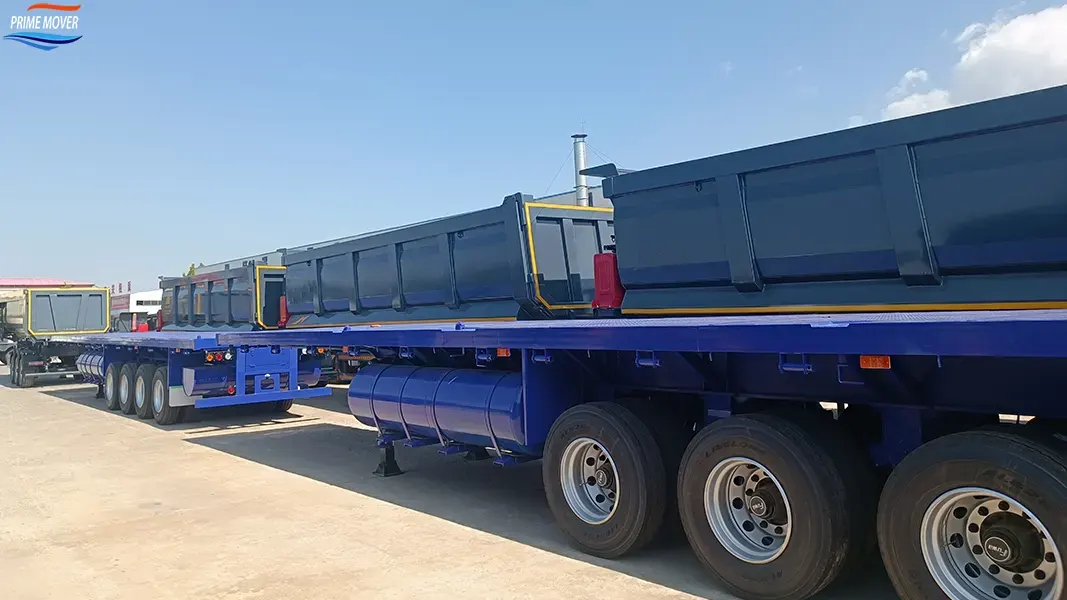
Jamieson Skeletal Trailers are engineered as a truly modular transport platform, designed to handle the wide variety of containerised freight and bulk transport tasks. Available in multiple lengths, axle groups, and deck configurations, the range includes drop decks, flat decks, container lift skels, tipping skels, and single or multi-trailer configurations. Three flatbed semi-trailers can be combined to transport ultra-long goods—such as 40-meter cargo.
The Synergy: How These Innovations Work Together
The true power of modern flatbed design lies in how these three pillars reinforce each other:
- Lightweight materials (eco-design) enable modular components that can be added or removed without compromising structural integrity—while maintaining the strength needed for secure load restraint.
- Smart telematics (load security) provide data that helps optimize fuel efficiency (eco-design) by monitoring tire pressure, weight distribution, and route conditions.
- Modular designs allow fleets to retrofit new load security and telematics systems—such as Hyundai Translead's rolling tarp system or side ladders, available for retrofit on any flatbed—extending the life and capability of existing assets.
- Eco-design principles reduce weight, which in turn reduces the forces that load securement systems must manage—allowing for lighter, more ergonomic securement components.
This synergy means that fleet operators no longer have to choose between safety, sustainability, and versatility. Modern flatbed trailers deliver all three.
The Business Case for Buyers
For freight companies, these innovations translate into more secure, efficient, and versatile transportation solutions:
- Improved cargo safety through advanced securement systems and real-time load monitoring
- Reduced operational costs through lightweight construction, fuel efficiency, and modular versatility
- Enhanced regulatory compliance through certification-compliant systems and telematics data
- Lower total cost of ownership through extended asset life and retrofit capability
- Competitive advantage through sustainability credentials
As sustainability becomes a growing concern, opting for eco-friendly models provides both environmental and commercial benefits. Buyers can now expect their flatbed semi-trailers to deliver on all fronts—security, sustainability, and adaptability—without compromise.
Conclusion
The flatbed semi-trailer is no longer a simple, static piece of equipment. It is becoming a smart, sustainable, and versatile platform—capable of securing cargo with unprecedented precision, delivering fuel efficiency through advanced materials, and adapting to diverse freight types through modular design.
From Krone's Multi Safe system with strapping points every 10 cm, to East Manufacturing's integrated aluminum side-rail meeting 5,400-pound load ratings, to Hyundai Translead's lighter-yet-stronger Latitude Flatbed, to Kässbohrer's 30-minute modular floor exchange—the innovations are real, proven, and available today.
The global flatbed semi-trailer market, projected to reach $15.6 billion by 2033, is being built on these three pillars. For fleet operators, the message is clear: the modern flatbed is safer, greener, and more versatile than ever before. And those who embrace these innovations will be best positioned to succeed in an increasingly demanding transport landscape.
For Prime Mover Industries, these developments reinforce our commitment to delivering innovative flatbed semi-trailer solutions that meet the evolving needs of our global customers. From advanced load securement to lightweight eco-design and modular versatility, we continue to invest in the technologies that make flatbeds work harder, smarter, and more sustainably.
Ready to explore how modern flatbed semi-trailer innovations can benefit your fleet? Contact Prime Mover Industries today to discuss your transport equipment needs.
Written by
Prime Mover Industries
Editor Wang
www.flatbed-semi-trailer.com
WhatsApp:+86-189 5386 6163
Email:wlei66@126.com
PRIME MOVER
INDUSTRIES LIMITED