
PRIME MOVER
INDUSTRIES LIMITED
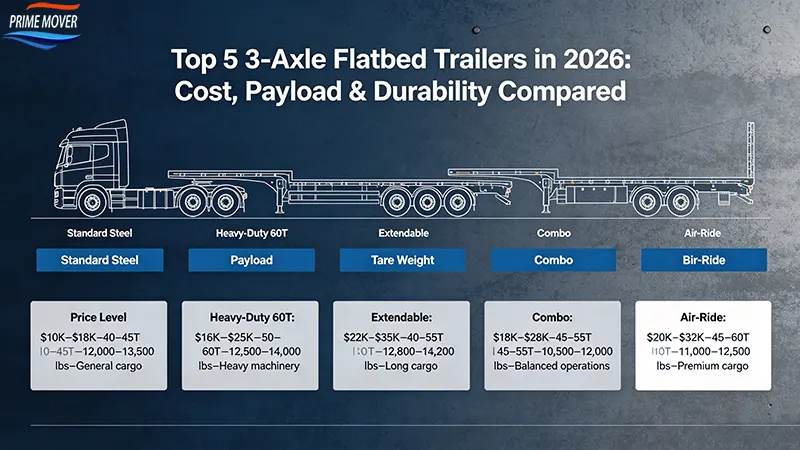
Top 5 3-Axle Flatbed Trailers in 2026: Cost, Payload & Durability Compared
The 3-axle flatbed trailer remains the single most versatile asset in open-deck freight. It hauls containers, steel, machinery, lumber, and oversized cargo — often on the same trailer across the same week. But "3-axle flatbed" describes a category, not a product. Two trailers with identical axle counts can differ by 40% in purchase price, 25% in empty weight, and years in service life.
This guide compares five 3-axle flatbed trailer configurations that matter most to fleet buyers in 2026: the Standard Steel model, the 60-Ton Heavy-Duty configuration, the Extendable flatbed, the Combo (steel-aluminum) build, and the Air-Ride suspension variant. For each, we break down cost, payload, and durability — with the specification data and ROI math to back it up.
Why 3 Axles? The Market Logic Behind the Standard Configuration
The 3-axle configuration dominates the global flatbed trailer market with 42% market share, and the reason is regulatory and operational rather than arbitrary. Three axles hit the sweet spot where payload capacity, axle load compliance, and road stability intersect.
The global flatbed trailer market was valued at US$ 9.1 billion in 2026 and is projected to reach US$ 11.0 billion by 2033, growing at a 2.7% CAGR. The 25.1–50 ton capacity segment accounts for 35% of the market, representing the industry standard for mid-range freight — and 3-axle trailers are the primary vehicle for that segment.
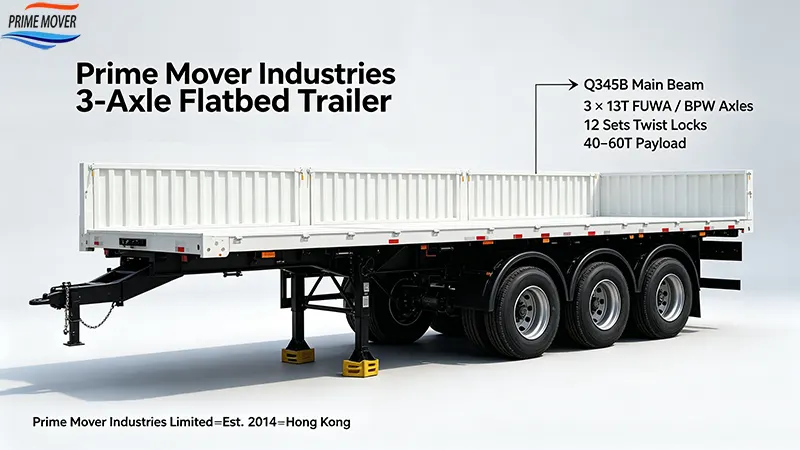
A standard 3-axle flatbed typically carries 40–45 tons of payload with 12,000–12,500 mm overall length and 2,500 mm width. A single 40-ft tri-axle flatbed can transport either one 40-ft container or two 20-ft containers using 12 sets of twist locks.
But the specification differences between trailer tiers are where the real ROI decisions live. Let's examine each.
1. Standard Steel 3-Axle Flatbed — The Volume Buyer's Choice
The standard steel 3-axle flatbed is the workhorse of the category. It uses a Q345B steel I-beam main beam (height 500 mm, top plate 14 mm, lower plate 16 mm, middle web 8 mm), 3×13T axles from FUWA or BPW, mechanical leaf spring suspension, and a 3 mm diamond plate floor.
Cost Breakdown
| Cost Component | 2026 Range (FOB China) |
| Standard steel 3-axle flatbed (40–48 ft) | $10,000–$18,000 |
| Heavy-duty variant (60T+) | $15,000–$25,000 |
| Extendable configuration | $15,000–$30,000 |
| Export-ready with ABS/EBS | $16,000–$22,000 |
Source pricing: A new CIMC 3-axle 40-ft flatbed listed at $10,000 FOB China in 2026. A Fudeng heavy-duty unit listed at $9,400 for export markets. A Bhachu 40-ft flatbed quoted at $10,200.
The global price range varies by market: China $8,000–$15,000, Southeast Asia $12,000–$18,000, Africa $10,000–$20,000, Europe $20,000–$35,000, and USA/Canada $25,000–$45,000. The gap between Chinese FOB pricing and Western retail pricing reflects dealer markup, compliance certification, and shipping — not a difference in core steel content.
Payload & Specifications
| Specification | Standard Value |
| Tare Weight | ~7.1 T |
| Loading Capacity | 40–60 T |
| Dimensions (L×W×H) | 12,500 × 2,500 × 1,500–1,530 mm |
| Axles | 3 × 13T (FUWA / BPW / Huajing) |
| Suspension | Mechanical leaf spring, 10 layers 90×13 mm |
| Tires | 12R22.5 (12 units) |
| Brake System | Dual-line pneumatic with WABCO relay valve |
| Twist Locks | 12 sets (lifting or twist-screw type) |
The 40–60 ton payload range means a standard configuration hauls most containerized freight and construction materials legally. The tare weight of 7.1 tonnes leaves approximately 48 tons of payload within a 55-ton gross vehicle weight — sufficient for the majority of general freight operations.
Durability Profile
The Q345B main beam delivers a yield strength of 345 MPa, which is the industry benchmark for continuous heavy-load service. The beam structure (500 mm height, 14/16 mm flanges, 8 mm web) handles bending and torsional stress under 40–50 ton distributed loads.
The vulnerability is corrosion. A case study of West African fleet operations found that 4 out of 10 trailers from a supplier using thin paint films developed main beam cracks in less than 12 months, with corrosion beginning under the paint layer. The solution: specify complete chassis sandblasting + 2 coats anticorrosive primer + 2 coats final paint — which most reputable Chinese manufacturers now include as standard.
Verdict: The standard steel 3-axle flatbed delivers the lowest cost per ton of payload of any configuration. It is the right choice for high-volume general freight where consistent utilization matters more than maximum single-load capability.
2. 60-Ton Heavy-Duty 3-Axle Flatbed — The Reinforced Workhorse
The heavy-duty 3-axle variant upgrades the standard platform with thicker main beam steel, reinforced cross-members, and higher-rated axles. This configuration targets construction materials, steel coils, and equipment that pushes the upper limits of legal weight.
Cost Breakdown
| Cost Component | 2026 Range |
| Heavy-duty 3-axle flatbed (60T rated) | $15,000–$25,000 |
| Reinforced 100T variant | $20,000–$35,000 |
| Upgrade to 16T axles | +$800–$1,500 |
| Upgrade to WABCO EBS | +$1,200–$2,000 |
Payload & Specifications
Shacman's 3-axle heavy-duty platform is rated for 30–80 tons, with specific reinforced models accommodating up to 100 tons for extreme applications. The key reinforcement features:
| Specification | Heavy-Duty Upgrade |
| Main Beam | Q345B steel, 500 mm height, 20 mm top plate, 24 mm bottom plate |
| Cross Beams | Q235B steel, increased density |
| Axles | 3 × 16T or 3 × 20T (optional) |
| Suspension | Bogie suspension available for extreme loads |
| Floor Plate | 3 mm checkered plate (standard) |
Durability Profile
The heavy-duty model's thicker beam plates (20 mm vs. 14 mm top) increase bending resistance by approximately 40% without proportional weight gain. Bogie suspension distributes load across the axle group more evenly than standard leaf springs, reducing individual axle stress during dynamic loading.
A West African fleet case study documented 15 Kales 40-ft flatbed trailers achieving zero structural failures and 99%+ uptime over 12 months in tropical conditions — using Q355 high-strength low-alloy steel (a step above Q345B) and more consistent welding in high-stress zones.
Verdict: The 60-ton heavy-duty configuration is the right choice for fleets regularly loading at the upper legal weight limit. The cost premium of $5,000–$7,000 over a standard model buys 15–20 tons of additional rated capacity and substantially longer service life under concentrated loads.
3. Extendable 3-Axle Flatbed — The Long-Cargo Specialist
Extendable 3-axle flatbeds telescope from a standard 13 m platform to over 20 m to carry pipes, wind turbine blades, girders, and other long cargo that exceeds standard trailer length.
Cost Breakdown
| Cost Component | 2026 Range |
| Extendable 3-axle flatbed (13–20 m) | $15,000–$30,000 |
| Premium extendable (21 m max) | $25,000–$35,000 |
Extendable flatbeds expand at the fastest rate of any flatbed sub-category — 3.9% CAGR — driven by demand for wind energy components, large-diameter pipe, and infrastructure beams.
Payload & Specifications
| Specification | Value |
| Extended Length | 13 m → 20–21 m (7.5 m extension) |
| Base Length | 12,500–13,000 mm |
| Payload | 40–50 T (reduced capacity when extended) |
| Axles | 3 × 13T |
| Twist Locks | Configurable for container or break-bulk cargo |
Durability Profile
The telescoping mechanism introduces wear points that fixed trailers do not have: sliding rails, locking pins, and hydraulic systems (on powered models). These components require quarterly inspection and annual lubrication beyond standard trailer maintenance.
The load capacity typically drops when the trailer is extended beyond 75% of its maximum length. Manufacturers specify a reduced payload rating in the extended position to prevent beam over-stress.
Verdict: The extendable flatbed is a specialist tool, not a general freight solution. It makes sense for fleets with consistent long-cargo contracts (wind energy, pipeline, structural steel) that would otherwise pay for oversize permits on every load.
4. Combo (Steel-Aluminum) 3-Axle Flatbed — The Balanced Performer
Combo trailers pair a steel main beam (strength where it matters) with aluminum floor, cross-members, and side rails (weight savings everywhere else). This is the fastest-growing configuration among owner-operators and mid-size fleets.
Cost Breakdown
| Cost Component | 2026 Range |
| Combo 3-axle flatbed (48–53 ft) | $45,000–$55,000 (US/EU pricing) |
| China FOB equivalent | $18,000–$25,000 |
Payload & Specifications
| Specification | Standard Steel | Combo | All-Aluminum |
| Tare Weight | 12,000–13,500 lbs | 10,500–12,000 lbs | 9,000–10,500 lbs |
| Payload (within 80k GVWR) | ~48,000 lbs | ~46,000–48,000 lbs | ~47,000–48,000 lbs |
| Corrosion Resistance | Low (requires coating) | Moderate | High (inherent) |
| Repair Difficulty | Easy (weldable) | Moderate | Difficult (specialized) |
The weight savings of 1,000–2,500 lbs versus all-steel translate directly into additional payload on every trip.
Durability Profile
The steel main beam provides the same structural integrity as an all-steel trailer. The aluminum components resist corrosion naturally — an advantage in coastal operations, northern climates with road salt, and humid tropical environments.
The trade-off: Aluminum is harder to weld in the field. If a cross-member or side rail is damaged, repair requires a shop with aluminum welding capability.
Verdict: The combo flatbed is the smartest specification for mixed-use fleets that need steel-level beam strength but want meaningful weight savings.
5. Air-Ride Suspension 3-Axle Flatbed — The Cargo Protection Upgrade
Suspension choice is the single most under-appreciated specification decision in flatbed purchasing.
Cost Breakdown
| Suspension Type | Upfront Cost | Annual Maintenance |
| Mechanical Leaf Spring | Standard (included) | $500–$1,200 |
| Air Ride | +$1,500–$3,000 | $800–$1,800 |
Air suspension systems typically last 2–3 times longer than leaf spring systems due to reduced internal friction and wear.
Payload & Specifications
| Feature | Mechanical Leaf Spring | Air Ride |
| Ride Quality | Harsher, direct road feedback | Smoother, absorbs impacts |
| Height Adjustment | Fixed | Automatic load leveling |
| Cargo Protection | Basic | Excellent |
| Container Lock Engagement | Standard | 41% fewer twist-lock failures |
Durability Profile
The ROI math is straightforward. Based on 2025 fleet audits across Germany, Poland, and UAE, the breakeven point occurs at 18 months for fleets averaging >75,000 km/year.
Verdict: Air ride pays for itself within 18 months for high-mileage fleets with precision cargo. Mechanical leaf spring remains the cost-effective choice for low-mileage, rough-terrain operations.
Head-to-Head Comparison Table
| Specification | Standard Steel | Heavy-Duty 60T | Extendable | Combo | Air-Ride |
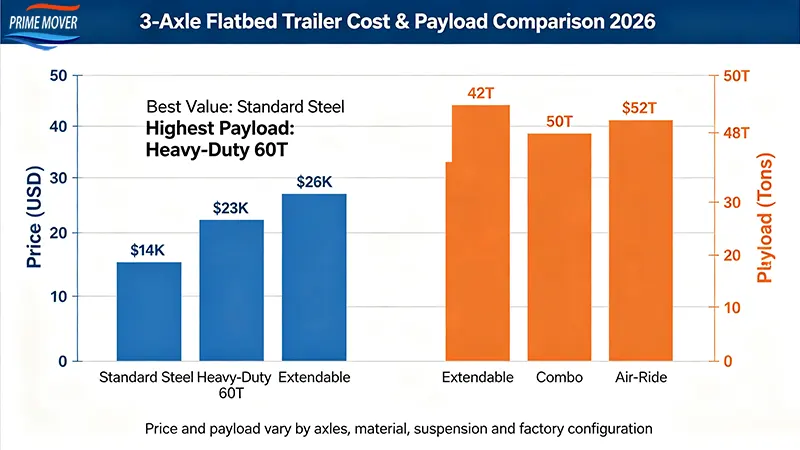
| FOB Price Range | $10k–$18k | $15k–$25k | $15k–$30k | $18k–$25k | +$1.5k–$3k |
| Tare Weight | 7.1 T | 8.5–10 T | 8.0–9 T | 5.5–6.5 T | Same |
| Payload | 40–45 T | 60–100 T | 40–50 T | 45–48 T | Same |
| Durability (years) | 8–12 | 12–15 | 8–10 | 10–14 | 10–15 |
| Best For | Volume freight | Construction/heavy loads | Long cargo | Mixed fleets | High-mileage fleets |
| Corrosion Risk | Moderate | Moderate | Moderate | Low | Depends on material |
| Maintenance Cost/Year | $500–$1,200 | $800–$1,500 | $1,000–$2,000 | $600–$1,300 | $800–$1,800 |
| Resale Value | Strong | Moderate | Weak (specialized) | Strong | Very strong |
The ROI Math That Matters
A 3-axle flatbed trailer typically depreciates 15–20% annually. But the right specification can yield 20–35% higher returns over a 5-year period compared to suboptimal choices.
Assume 2,200 loaded miles per week (114,400 miles/year) at an average flatbed rate of $2.85/mile:
| Metric | Standard Steel | Combo | Combo + Air-Ride |
| Trailer Cost | $14,000 | $20,000 | $22,500 |
| Annual Revenue | $326,040 | $326,040 | $326,040 |
| Additional Payload Revenue | — | +$8,400 | +$8,400 |
| Fuel Savings (lighter trailer) | — | +$3,200 | +$3,500 |
| Tire/Suspension Savings | — | — | +$1,800 |
| 5-Year Net Advantage | Baseline | +$44,000 | +$63,000 |
Prime Mover Industries: Specification Flexibility for Every Fleet
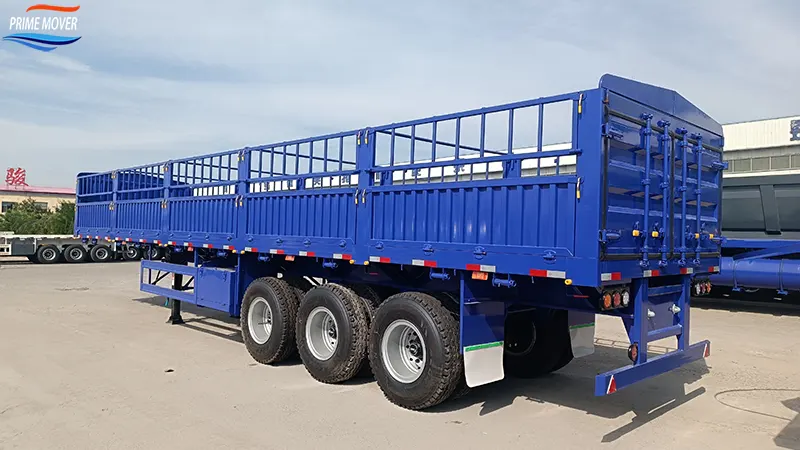
Prime Mover Industries — a Hong Kong-based manufacturer and global exporter established in 2014 — builds all five 3-axle flatbed configurations profiled in this comparison. The company serves construction, logistics, agriculture, and heavy industry clients across Africa, Southeast Asia, the Middle East, and beyond.
Standard specifications across the Prime Mover 3-axle flatbed line:
| Component | Standard | Optional Upgrade |
| Main Beam | Q345B steel, 500×14/16/8 mm | Q460 high-strength steel |
| Axles | 3 × 13T FUWA / BPW | 3 × 16T / 20T |
| Suspension | Mechanical leaf spring, 10 layers | Air suspension / ECAS |
| Brake System | Dual-line pneumatic, WABCO relay valve | ABS / EBS 4S/3M |
| Floor | 3 mm diamond plate | 4 mm checkered plate |
| Twist Locks | 12 sets (lifting or twist-screw) | Custom configuration |
| Coating | Sandblast + 2 primer + 2 topcoats | Hot-dip galvanizing (stake pockets) |
Key differentiators for international buyers:
- Factory-direct pricing — no distributor markup, quoted in USD
- Third-party inspection support — SGS, BV, or buyer-nominated inspector
- Export documentation — full set for customs clearance
- After-sales parts — standardized components (12R22.5 tires, WABCO valves) available globally
Contact Prime Mover Industries for a customized 3-axle flatbed specification quote.
Written by
Prime Mover Industries
Editor Wang
WhatsApp:+86-189 5386 6163
Email:wlei66@126.com
PRIME MOVER
INDUSTRIES LIMITED